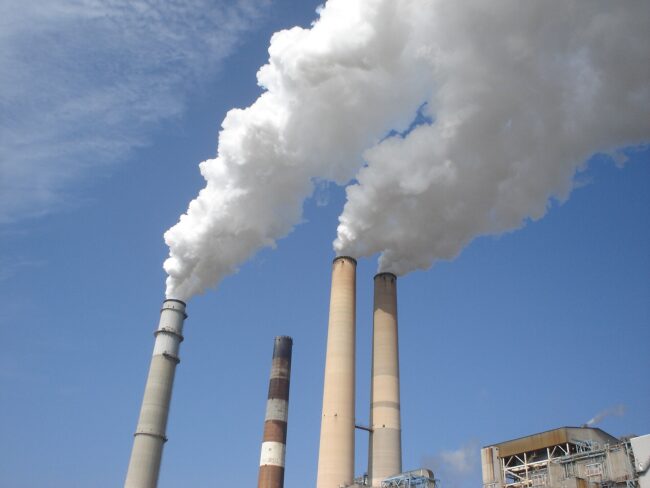
Big Bend Power Station, Apollo Beach. Photo: Monkeyboy0076 via Wikimedia Commons / Public domain
Quick Answer: Tampa Electric contributed US$217 million to parent Emera’s third-quarter 2026 earnings and US$537 million through September, up about 2.9% year to date on new base rates from its 2025 rate case. Residential bills fell 11.6% in August when the hurricane storm charge ended, a further 1.4% cut is proposed for January 2027, and base rates are frozen until 2028. Emera is directing about 82% of a $21.5 billion five-year capital plan to Florida as Tampa Electric prepares for data center load.
Tampa Electric serves more than 840,000 customers across about 2,000 square miles of Hillsborough County and parts of Polk, Pasco and Pinellas counties, making it a direct cost line for thousands of Tampa Bay businesses. Canada-based Emera Inc., which acquired the utility in 2016, released third-quarter 2026 results on Nov. 6. Those filings, recent Florida Public Service Commission (PSC) orders and the utility’s own rate disclosures show what customers pay now and where the company is investing.
How Did Tampa Electric Perform in Q3 2026?
Emera reports Tampa Electric as its Florida Electric Utility segment. Third-quarter net income was US$217 million versus US$220 million a year earlier. Nine-month net income rose to US$537 million from US$522 million. The segment had no adjusting items, so net and adjusted earnings match. Chief Financial Officer Jared Green said new base rates and customer growth were offset by two items from a Bayside Power Station settlement. Emera expects Tampa Electric to earn within its allowed return range in 2026 and to post higher U.S.-dollar earnings than in 2025.
| Metric | Q3 2026 | Q3 2025 | 9 mo. 2026 | 9 mo. 2025 |
|---|---|---|---|---|
| Net income (US$) | $217M | $220M | $537M | $522M |
| Regulated electric revenue (US$) | $893M | $921M | $2,557M | $2,409M |
| Electric sales (GWh) | 6,349 | 6,270 | 16,401 | 16,306 |
| Average fuel cost (US$/MWh) | $34 | $31 | $36 | $32 |
Source: Emera Inc. Q3 2026 Management’s Discussion and Analysis.
Why did revenue rise while quarterly profit dipped?
Nine-month operating revenue rose US$148 million on new base rates, higher off-system sales, regulatory deferral revenue, customer growth and favorable weather. Most of the gain was absorbed by costs: fuel and purchased power rose US$62 million (including a one-time US$10 million settlement fuel reduction), depreciation rose US$31 million, interest US$16 million and state and municipal taxes US$19 million. Third-quarter revenue fell US$28 million on lower storm cost recovery and weather, while operating expense improved US$60 million because less storm cost was recognized.
Is electricity demand still growing?
Modestly. Nine-month sales rose about 0.6% and third-quarter sales about 1.3%. Emera CEO Scott Balfour credited Florida’s growing economy and population but gave no customer growth percentage for Tampa Electric. Production rose about 0.6% for nine months while average fuel cost climbed to US$36 per megawatt-hour from US$32, reflecting higher natural gas prices. Data center demand is the bigger potential swing factor, covered below.
What Did the 2025 Rate Case Decide?
Tampa Electric filed in April 2024, originally seeking about US$296.6 million in new base revenue for 2025 plus about US$100 million for 2026 and US$72 million for 2027, with an 11.5% return on equity. In August 2024 it trimmed the request to US$287.9 million, US$92.4 million and US$65.5 million. Commission staff recommended a 10.3% return and smaller increases, including no 2027 step. The PSC voted in December 2024 and issued its final order Feb. 3, 2025, effective Jan. 1, 2025. In May 2025 it largely rejected the Office of Public Counsel’s reconsideration request, correcting only a mathematical error the office had identified. The approved 2026 step is what pushed residential bills up 5.3% this January.
| Item | Original request | PSC staff | Outcome |
|---|---|---|---|
| 2025 increase | ~$296.6M | $153.4M | Nearly $185M |
| 2026 step | ~$100M | $74.7M | ~$86.6M |
| 2027 step | $72M | None | ~$9.1M (petition pending) |
| ROE midpoint | 11.5% | 10.3% | 10.5% (from 10.2%) |
Sources: WUSF Public Media; Emera Q3 2026 MD&A. Base revenue, U.S. dollars.
Is the rate case still being challenged?
Yes. The Office of Public Counsel, Florida Rising and LULAC Florida appealed to the Florida Supreme Court in March 2025. According to Emera’s MD&A, the appellants filed briefs Jan. 12, 2026, and the PSC and Tampa Electric responded April 13, 2026. The court heard oral arguments Oct. 7, 2026, and had not ruled as of Emera’s Nov. 6 filing. Separately, Tampa Electric petitioned Sept. 3, 2026, for its final 2027 step of about US$9 million, with a decision expected this quarter.
What Is the Bayside Settlement and Rate Freeze?
On Aug. 24, 2026, the PSC approved a June settlement between Tampa Electric and the Office of Public Counsel resolving 2025 Bayside outages and depreciation. Its key terms:
- Base rate freeze: no general base rate changes effective before Jan. 1, 2028, except the 2027 step and statutory large load tariffs.
- Fuel credit: a combined US$10 million reduction in recoverable fuel and purchased power cost, reflected on 2027 bills.
- Depreciation: revised Bayside rates effective July 1, 2026, cutting 2026 depreciation about US$9.6 million and annual depreciation about US$20 million, per Emera.
The order also notes three solar projects totaling 166.5 megawatts expected in service by December 2026, with a US$22.7 million revenue requirement that the utility said would not affect 2027 bills because of the freeze.
How Have Tampa Electric Bills Changed?
The biggest swings came from storms, not base rates. In March 2025, regulators approved a surcharge to recover more than US$400 million in costs from the 2024 season of Tropical Storm Debby and Hurricanes Helene and Milton, when Tampa Electric brought in 9,500 out-of-state workers. Planned for 18 months, the charge ended Aug. 1, 2026, a month early.
| Effective | Change | 1,000-kWh residential bill |
|---|---|---|
| Jan. 2025 | +$9.14 (+6.7%), new base rates | $145.58 |
| Mar. 2025 | +$19.95 (+14.1%), storm charge | $166.04 |
| June 2025 | +$1.97 (+1.2%), fuel credit ended | $168.01 |
| Jan. 2026 | +$8.88 (+5.3%), 2026 step | $176.89 |
| Aug. 2026 | -$19.95 (-11.6%), storm charge ended | $156.43 |
| Jan. 2027 (proposed) | -$2.25 (-1.4%), lower fuel | $154.18 |
Source: Tampa Electric rates page, November 2026.
What does January 2027 mean for businesses?
Tampa Electric asked regulators to pass lower natural gas costs to bills; fuel is about 20% of a residential bill and is passed through without markup. Commercial and industrial customers would see cuts of roughly 1.5% to 6%, depending on usage. Balfour said rates are about 25% below the national average and that Tampa Electric bills have risen less than the national average since the 2016 acquisition. The PSC was scheduled to consider the request Nov. 3. The August change saved residential and small business accounts about US$20 per 1,000 kWh, or nearly US$60 at 3,000 kWh.
Where Is the Capital Going?
Emera expects Tampa Electric capital spending of about US$1.8 billion in 2026, up from US$1.6 billion in 2025, for generation reliability, storm hardening, grid modernization and transmission. Emera’s new five-year plan totals about $21.5 billion, roughly $1.1 billion above last year’s, with about 82% for Florida’s Tampa Electric and Peoples Gas, or roughly $17.6 billion by arithmetic; no Tampa Electric-only total was given. Emera raised its rate base growth target to 7.5% to 8.5%, and Balfour said Florida is expected closer to 9%.
On hardening, Tampa Electric says it has moved more than 270 miles of overhead lines underground, putting more than half of distribution lines underground, and replaced or reinforced about 7,000 poles. It is raising critical equipment in flood-prone, low-lying areas and adding grid technology designed to spot problems, such as a tree touching a line, before they cause outages. Green said Tampa Electric expects to complete a financing before the end of 2026 to support the capital plan. At sister utility Peoples Gas, Balfour said about US$1 billion of investment is planned through 2031 to serve customer growth across Florida.
What Is the Solar and Generation Build?
System capacity is about 6,433 megawatts including solar, anchored by Bayside (2,138 MW), Big Bend in Apollo Beach (1,623 MW) and Polk (1,420 MW). Tampa Electric’s 29 solar plants total about 1,499 megawatts AC, and the company says solar saved customers more than US$430 million in fuel through July 2026. The 166.5 megawatts due by December would push it past its goal of more than 1,600 megawatts by year-end.
| County | Plants | MW AC | Examples |
|---|---|---|---|
| Hillsborough | 16 | 741.9 | Wimauma, Lithia, Little Manatee River |
| Polk | 10 | 557.7 | Jamison, Lake Mabel, Magnolia |
| Pasco | 2 | 124.6 | Juniper, Mountain View |
| Manatee | 1 | 74.5 | Long Branch (Duette) |
| Total | 29 | ~1,498.7 | Plus 166.5 MW due by Dec. 2026 |
Sources: Tampa Electric solar projects page; PSC Order No. PSC-2026-0297-FOF-EI.
What is planned for Big Bend?
Balfour said a Big Bend Unit 4 modernization will add about 720 megawatts of efficient generation using existing infrastructure, with construction starting in 2027 and full operation targeted for 2032. Tampa Electric expects the 2023 Big Bend Unit 1 modernization to save customers about US$700 million over its life. A modernization of Polk Unit 1, which can run on natural gas or a backup fuel and responds faster to changing demand, is expected to save about US$152 million. Bayside, the largest plant, remains central to the fuel and depreciation issues addressed in the 2026 settlement.
Are Data Centers Coming to Tampa Electric’s Territory?
On Sept. 30, 2026, Tampa Electric filed a large load tariff under a data center law signed in May. Balfour said it covers up to 1,000 megawatts, with a second formula rate above that, and is designed so large customers pay the cost of serving them. A decision is expected in early 2027. A Tampa Electric spokesperson told local media in October that the utility currently serves no large-load customers. Duke Energy filed its own Florida large load plan in April.
System impact studies are complete for about 1,300 megawatts, and Balfour said each 100 megawatts adds about 2% to system demand. The lead prospect is the Auburndale Technology Center in Polk County, where a Hillwood-linked entity plans to convert warehouses on a 75-acre Pace Road site; developers estimate about 700 megawatts. Tampa Electric CEO Archie Collins expects a contract for the first 350 megawatts before year-end. He said the utility is very confident it can deliver up to 700 megawatts, and discussions are ongoing about 1,000 megawatts. Green said the first 350 megawatts is already in the capital plan and would require incremental capital in the tens of millions of dollars. Distribution and substation upgrades at the industrially zoned site are complete, and transmission interconnection is in progress.
Is there local pushback?
About 400 people, many opposed, attended a Nov. 10 Auburndale workshop, WUSF reported. That week Hillsborough commissioners postponed a vote on a one-year hyperscale data center moratorium; the county has no pending applications.
Frequently Asked Questions
Who owns Tampa Electric?
Emera Inc. has owned it since 2016. Emera plans to combine with Canadian Utilities, with closing expected in the second half of 2027, subject to approvals.
What return on equity does Tampa Electric earn?
The PSC set a 10.5% midpoint in its Feb. 3, 2025, order, versus the 11.5% requested.
Will base rates rise again soon?
Not before Jan. 1, 2028, under the Bayside settlement, aside from the pending 2027 step of about US$9 million and large load tariffs.
What is a 1,000-kWh residential bill now?
$156.43 since August 2026, proposed to fall to $154.18 in January 2027.
How much solar does Tampa Electric have?
29 plants totaling about 1,499 megawatts AC in Hillsborough, Polk, Pasco and Manatee counties, plus 166.5 megawatts due by December 2026.
Will data centers raise other customers’ bills?
The large load tariff is designed to make large customers cover their own costs. The PSC has not yet ruled.
Sources and Further Reading
- Q3 2026 Management’s Discussion and Analysis, Emera Inc.
- Q3 2026 Earnings Conference Call Transcript, Emera Inc.
- Emera Reports 2026 Third Quarter Financial Results and Unveils $21.5 Billion Five-Year Capital Plan, Emera Inc. via Business Wire
- Order No. PSC-2026-0297-FOF-EI, Florida Public Service Commission
- Florida utility regulators approve TECO rate increase, WUSF Public Media
- Florida Public Service Commission keeps TECO rate hikes, WUSF Public Media
- Rates, Tampa Electric
- Tampa Electric to lower rates 12% on August 1, Tampa Electric
- Tampa Electric Seeks Another Bill Reduction for Customers Beginning in January, Tampa Electric
- Three Ways We’re Working to Keep Power Reliable and Costs Down, Tampa Electric
- Solar Projects and Vital Statistics, Tampa Electric
- Tampa Electric files plan to protect customers from data center costs, Bay News 9
- Major data center planned for Polk County, WFLA
- Hillsborough delays data center moratorium vote, WUSF Public Media
About the Author