The Great PR Shell Game:
In the shadowy, gray-hat corners of digital marketing, agencies like Otter PR (based in St Petersburg, Fl) routinely pitch small-business owners a glowing dream: guaranteed placement in prestigious, legacy media outlets. On paper, it sounds like an incredible transformation.
Imagine a local roofing outfit operating out of Odessa, Florida, being told that Forbes—a world-class business publication that prints only eight print editions a year—is desperate to write a featured story on their shingle installation business.
To the uninitiated business owner, it feels like the ultimate stamp of credibility. To anyone who understands how modern media works, it is a ruthless, high-margin, pay-to-play racket that sells the illusion of prestige while delivering digital garbage. The logic behind the pitch is simple: the more outlandish the claim, the easier the sale.
Self-Proclaimed “#1” and the Self-Fulfilling Hype Machine
To fuel this client acquisition engine, these agencies run aggressive self-promotional campaigns. Right on their website’s header, Otter PR plasters the self-proclaimed title of #1 Rated PR Firm


as evidence, touting listings on paid networks, review platforms like Clutch and Trustpilot, and lists like the Inc. 5000 or Inc. Regionals: Southeast. They publish hype press releases
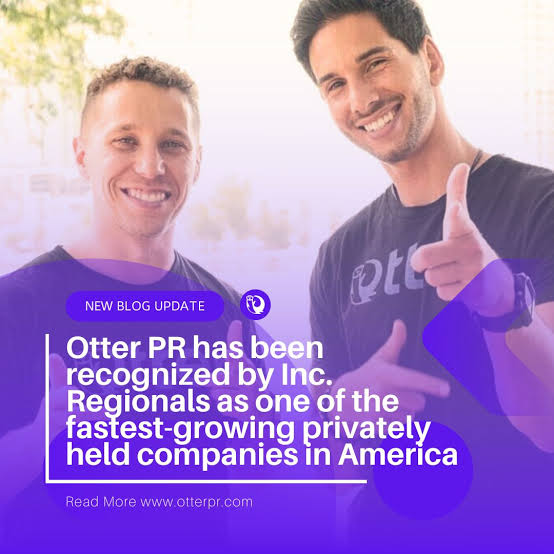
Boasting about two regional offices, dozens of staff members, and even listing a “Labradoodle” on their team roster. (group ahhh)
When you are in the business of making stuff up, why stop with fake articles and media links?
You might as well just declare yourself “#1 rated PR Firm” and “Fastest Growing in America”. When you write your own headline and create you own awards who is going to stop you or challenge it?
The most relevant part of being highest rated in Clutch.com is that you once paid for a premium advertising listing that ranked you first on their web page.
When an agency’s business model relies on selling low-cost, automated links at massive markups, rapid revenue growth and high review tallies aren’t proof of journalism or media relations excellence; they are proof of a high-volume sales funnel. The only thing a client can reliably count on from this setup is a steady delivery of inflated promises.
The Architecture of the Scam: Deep-Directory Ghost Links
News Flash… Major global news outlets do not cover local roofing operations for free, nor do they sell genuine editorial news stories. So how do these huckster PR firms deliver on their “guaranteed” promises?
They exploit loopholes, programmatic syndication networks, and deep-directory paid contributor programs.
- The $5 Wire Buy: Agencies buy bulk press release distribution packages or syndicated content slots on third-party networks for pennies.
- The Ghost URL: The article is published deep within a multi-folder URL directory—sometimes five or six levels deep (e.g.,
brand.com/partner-content/press-releases/archives/2026/08/odessa-roofer...). - Zero Site Visibility: The piece is never featured on the home page, never listed under main topic categories, never tweeted by real editors, and never linked internally. It exists as an “orphan page” on a legitimate domain, invisible to every organic reader on the planet.
- Zero Search Traction: Sitting miles below the surface, these pages rarely rank for meaningful search terms and exist purely as expensive digital paperweights.
The victim business owner can pay thousands of dollars for a piece of content that cost a PR agency under $100 to push through an automated channel.
The “As Seen On” Vanity Trap
The business model relies entirely on social proof manipulation. Once the obscure link goes live, the PR firm sends the client a direct URL along with a sleek, Photoshopped mockup of a magazine cover or a badged graphic featuring the target publication’s logo.
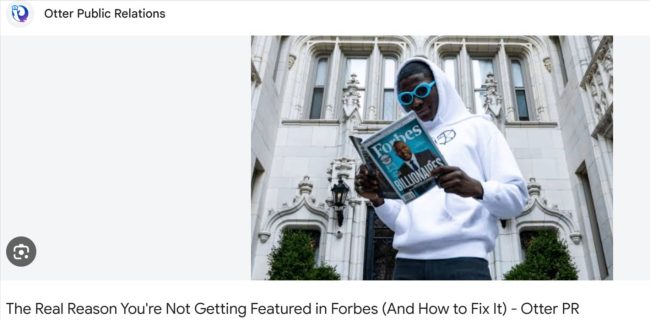
The roofing company in Odessa immediately slaps an “As Seen On Forbes” badge across the header of their website and posts the Photoshop edit to LinkedIn, boasting about their “nationwide recognition”.
The scam works because the average customer sees the domain name in the browser bar and trusts it blindly, completely unaware that the article lives in a digital graveyard where no human eyes will ever naturally land.
A Multi-Platform Shell Game
This scheme extends far beyond Forbes. Agencies use identical tactics across a wide range of major media names:
- Business Insider & Yahoo Business: Exploiting syndicated partner networks and contributor portals to drop orphaned, paywalled, or branded posts.
- MSN & CBS News Affiliates: Feeding low-grade press releases to regional affiliate RSS feeds (e.g., small local TV station sites) that automatically cross-post to MSN sub-directories, allowing the agency to claim a “CBS News Feature.”
- Associated Press (AP): Utilizing AP’s paid press release distribution wire to generate a temporary paid link, which is then pitched to clients as an “AP News Feature.”
The Scandalous Bottom Line
Guaranteed PR in top-tier media is a mathematical and editorial contradiction. Real journalists do not take cash under the table to write feature articles about regional trade contractors.
Reddit Truth Bomb
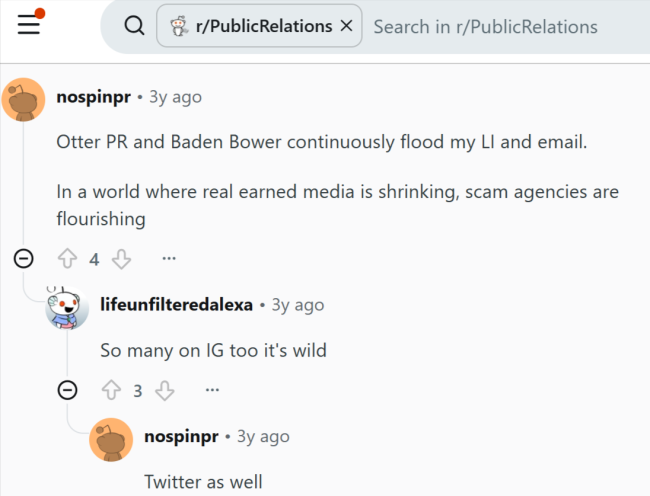
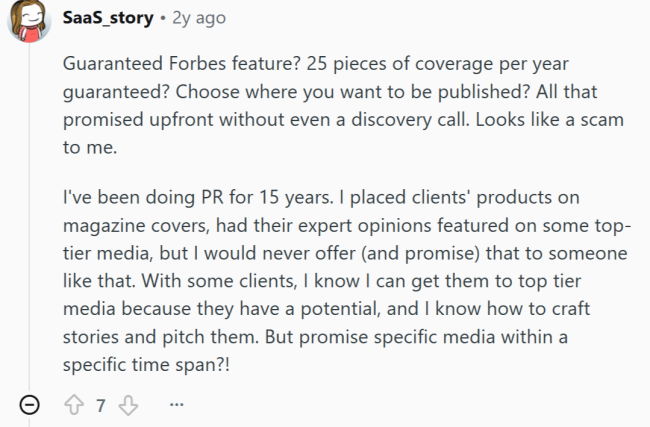
When an agency guarantees a placement in a top news brand, they are not selling earned media, storytelling expertise, or public relation strategy. They are selling an expensive link wrapped in a cheap illusion, pocketing massive markups while leaving the business owner holding nothing more than a vanity badge and an empty wallet.
Sources
- Otter PR About Us & Ratings Claims
- Otter PR Inc. Regionals Press Release Announcement
- Reddit Public Relations Community: Discussion on Guaranteed Coverage Scams
- Reddit Public Relations Community: Analysis of Pay-to-Play PR Agencies
- Synscribe: Breakdown of Low-Cost Press Release Services
- Spynn PR: Example of Guaranteed Publication Offerings
About the Author