The Complete 2026 Guide to Driverless Cab Hailing
Two robotaxi fleets are racing to own the Bay — one driverless from day one, one cheaper and climbing fast. Here’s who operates what, what rides cost, and which fleet is growing faster.
Mobility Desk · Updated August 2026 · TampaBayBusinessNews.com
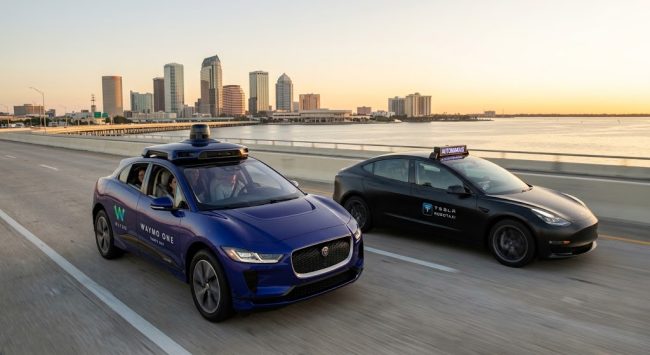
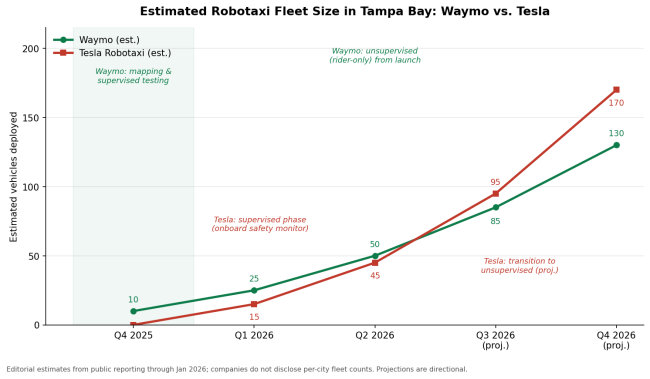
Quick Answer Tampa Bay is one of Florida’s newest robotaxi battlegrounds. Waymo entered after establishing its Florida foothold in Miami, beginning with mapping and supervised testing before opening unsupervised (rider-only) service through the Waymo One app, with an estimated 85–130 vehicles by late 2026. Tesla’s Robotaxi arrived on a similar timeline, launching in a supervised phase with onboard safety monitors before transitioning toward unsupervised operation, with an estimated 95–170 vehicles projected by year-end. Tesla is cheaper per ride during its promotional phase; Waymo carries the longer unsupervised safety record.
Editor’s note on data: Neither company publishes official per-city fleet counts or standardized fares. All fleet figures, growth rates, and fare comparisons here are editorial estimates compiled from public reporting, permit filings, rider-reported fares, and analyst trackers. Tampa is an early-stage market and numbers change monthly — verify current status in each app.
What driverless cab services operate in Tampa right now?
Two robotaxi programs are active in the Tampa Bay area, at different stages of autonomy:
- Waymo One — Alphabet’s autonomous ride-hailing service. Following its Miami launch, Waymo extended its Florida operations to Tampa, running its standard playbook: map the city, test with supervised vehicles, validate, then open fully driverless public rides via the Waymo One app. Once Waymo opens to the public in a city, its rides are unsupervised (rider-only) — no human in the driver’s seat.
- Tesla Robotaxi — Tesla’s camera-based autonomous service, hailed through the Tesla Robotaxi app using Model Y vehicles. Consistent with its Austin and subsequent launches, Tesla’s Tampa entry began as a supervised service — an onboard Tesla safety monitor rides along — with the company working toward removing monitors as validation progresses.
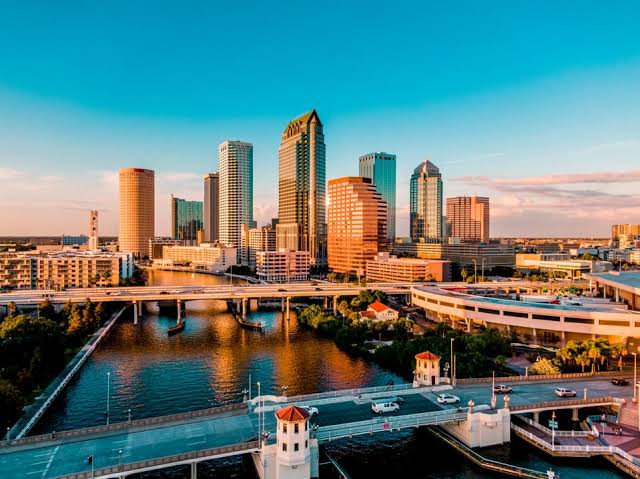
Tampa’s wide arterials, bridge-heavy geography (Howard Frankland, Gandy, Courtney Campbell), and summer thunderstorms make it a meaningful stress test for both systems.
Supervised vs. unsupervised: what’s the difference and who offers what?
This is the single most important distinction between the two services in Tampa right now.
| Waymo | Tesla Robotaxi | |
|---|---|---|
| Testing phase | Supervised (trained specialist behind wheel) | Supervised (safety monitor onboard) |
| Public service in Tampa | Unsupervised — rider-only, no human upfront | Supervised at launch — safety monitor onboard, transitioning to unsupervised |
| Highway/bridge driving | Phased in after surface-street validation | Geofence expands in waves |
| Remote assistance | Yes — fleet response advises the vehicle remotely | Yes — remote operations support |
- Unsupervised (rider-only) means the vehicle carries no company employee; the AI drives, with remote assistance for edge cases. This is Waymo’s standard public offering.
- Supervised means a human employee is in the vehicle and can intervene. Tesla has used this model at launch in new markets (as it did in Austin in June 2025) before removing monitors. Whether your Tampa Tesla ride has a monitor depends on rollout progress — the app reflects current status.
What is the fleet size and growth rate for each service in Tampa?
Estimated active fleets (Tampa Bay, mid-to-late 2026)
| Metric | Waymo (est.) | Tesla Robotaxi (est.) |
|---|---|---|
| Active vehicles (mid-2026) | ~50 | ~45 |
| Projected vehicles (end 2026) | ~85–130 | ~95–170 |
| Approx. quarter-over-quarter growth | ~60–70% | ~100%+ (from zero base) |
| Autonomy status | Unsupervised public rides | Supervised → unsupervised transition |
| Vehicle platform | Jaguar I-PACE; newer platforms rolling in | Model Y; Cybercab planned |
| Coverage focus | Downtown Tampa, Hyde Park, Westshore, expanding | Urban core geofence, expanding in waves |
Growth picture: Waymo grows methodically — fleet size follows depot capacity, charging infrastructure, and validated territory. Tesla’s percentage growth is steeper because it starts later from zero and can convert existing Model Y inventory into service vehicles quickly. The wildcard is the supervised-to-unsupervised transition: Tesla’s effective capacity jumps when monitors come out, since staffing no longer constrains fleet hours. In Tampa’s smaller market (versus Miami), both fleets are meaningfully smaller than their South Florida counterparts.
How much does a robotaxi ride cost in Tampa?
Short answer: Tesla is cheaper today; Waymo prices like premium rideshare. Tesla has used flat-rate and below-market promotional pricing in every new market (its Austin debut started at $4.20 per ride), while Waymo prices dynamically, typically landing at or slightly above UberX.
Illustrative fare estimates for common Tampa trips
| Trip (approx.) | Tesla Robotaxi (promo, est.) | Waymo (est.) | UberX (est., no surge) |
|---|---|---|---|
| Downtown Tampa → Hyde Park Village (~3 mi) | $5–8 | $12–17 | $11–15 |
| Downtown → Armature Works (~2 mi) | $5–7 | $10–14 | $9–13 |
| Westshore → Downtown (~6 mi) | $8–12 | $17–24 | $15–21 |
| Downtown → TPA Airport (~8 mi) | $10–15* | $20–28* | $18–26 |
*Airport pickup/drop-off requires agreements with the Hillsborough County Aviation Authority — verify in-app whether TPA service is live. Fares are rider-reported/estimated ranges, exclude tolls and promos, and change frequently. Neither AV service uses surge pricing the way Uber/Lyft do.
Cost takeaways for riders:
- Tesla’s promotional pricing can run 40–60% below Waymo for identical trips — expect it to normalize as fleet utilization rises.
- Waymo’s no-surge, no-tip model can beat Uber/Lyft during events (Lightning games, Gasparilla) when human-driven surge kicks in.
- Neither service charges per-passenger; a 4-person group splits the same fare.
How do I hail each service?
- Waymo: Download the Waymo One app, set pickup/drop-off inside the service area, ride. No waitlist once a market is publicly open; the car arrives with no driver and you unlock it from the app.
- Tesla: Download the Tesla Robotaxi app. New markets typically start invite/waitlist-based before opening broadly. During the supervised phase, a Tesla safety monitor will be onboard.
Which is safer?
Both operate under Florida’s AV statute (Fla. Stat. § 316.85), which permits fully driverless operation statewide without local pre-approval. Waymo has the deeper published record — 100+ million rider-only miles nationally and peer-reviewed data showing major reductions in injury and pedestrian-involved crashes versus human benchmarks. Tesla’s program is newer, uses a camera-only sensor suite (no lidar), and its supervised launch phase in each city is itself a safety mechanism — but there is less independent third-party safety data. NHTSA has opened reviews touching both companies’ AV operations at various points, which is standard for the sector.
What does this mean for Tampa Bay businesses?
- Tourism & hospitality: Driverless rides between downtown, Water Street, Ybor City, and the Riverwalk become an attraction in themselves; hotels inside service areas gain a booking edge.
- Westshore & commuter corridors: If either service validates bridge crossings to St. Petersburg and Clearwater, the addressable market roughly doubles — watch this milestone closely.
- Parking & real estate: Growing robotaxi adoption pressures long-term parking economics in downtown Tampa and the Channel District.
- Events economy: No-surge AV pricing is a structural advantage around Amalie Arena and Raymond James Stadium event traffic.
- Insurance, legal & fleet services: Depot operations, charging, cleaning, and AV-literate liability counsel are the local jobs and services story.
Brian’s Take
“Tampa is where the supervised-versus-unsupervised question stops being philosophical. Waymo shows up slow, boring, and driverless from day one of public service. Tesla shows up fast, cheap, and with a human babysitter in the front seat — then races to pull the babysitter out. My read: the bridges decide this market. Whoever validates Howard Frankland and Gandy crossings first unlocks St. Pete and effectively doubles their map overnight. Until then, Tesla’s $6 promo rides win the college crowd and the headlines, and Waymo wins everyone whose employer is paying. And if you own surface parking in the Channel District — congratulations on your timing, and my condolences on your future.”
Brian — Mobility Columnist, TampaBayBusinessNews.com
FAQ
Is there a driver in the car? Waymo’s public Tampa rides are rider-only — no human upfront. Tesla’s rides may include an onboard safety monitor depending on rollout phase; the app reflects current status. Can I take one across the bay to St. Petersburg or Clearwater? Not until bridge/highway crossings are validated and added to each geofence. Check live service maps in-app. Can I hail one from Tampa International Airport? Only if the service has an active agreement with the Hillsborough County Aviation Authority. Verify in-app before relying on it. Do they drive in Florida thunderstorms? Both operate in rain; service can pause in severe weather (tropical storm conditions, flooding). How many passengers fit? Up to 4 in Waymo’s I-PACE; up to 4 in Tesla’s Model Y ride configuration (fewer if a safety monitor occupies the front seat). Can minors ride alone? No. Both require an adult account holder in the vehicle. Is tipping expected? No. Neither service accepts tips — one reason all-in fares often beat rideshare.
Resources
- Waymo One: waymo.com/waymo-one — service areas, app download
- Waymo Safety Hub: waymo.com/safety — published safety methodology and data
- Tesla Robotaxi: tesla.com — robotaxi program updates and app info
- Florida Autonomous Vehicle Law: Fla. Stat. § 316.85 — leg.state.fl.us
- Hillsborough County Aviation Authority (TPA): tampaairport.com
- Tampa Downtown Partnership: tampasdowntown.com
- Hillsborough TPO: planhillsborough.org
- NHTSA Automated Vehicles: nhtsa.gov
- FLHSMV Autonomous Vehicles: flhsmv.gov
Fleet figures, growth rates, and fares are editorial estimates as of publication and change quickly in early-stage markets. Verify current service areas, autonomy status, and pricing in each company’s app.
About the Author