The Silicon Valley of the South: Why Tech and Fintech Giants are Anchoring in Tampa Bay and How to Command the Digital Corridor
For decades, the standard playbook for scaling an elite technology enterprise, multinational financial services firm, or high-margin B2B consultancy dictated a physical and operational presence in a handful of legacy American hubs—namely San Francisco, New York, or Boston. However, structural shifts in data economics, steep corporate taxation, climbing operational overhead, and changing executive lifestyle preferences have triggered a massive, permanent realignment. Today, commercial innovation lives where it can sustainably scale, and increasingly, that definitive destination is the Tampa Bay metropolitan area.
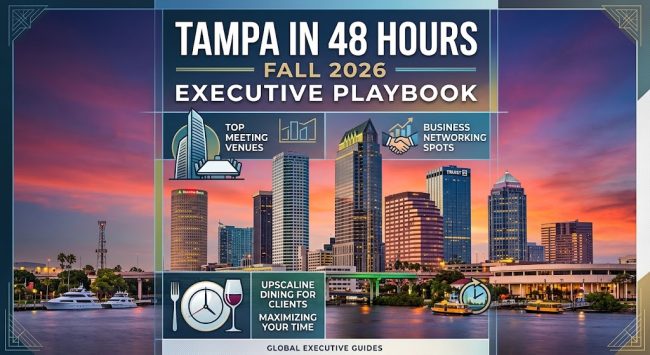
Earlier this year, Site Selection Magazine ranked the City of Tampa in a tie for the fifth-best business climate in America, marking the first time the metro has secured a top-five position nationally. Driven by Florida’s highly favorable tax climate, massive infrastructure modernizations, and an exploding ecosystem of cross-industry innovation, Tampa Bay has officially earned its title as the “Silicon Valley of the South.”
From the vertical expansion of downtown St. Petersburg to the bustling commercial pockets of Brandon and Carrollwood, capital is pouring into the region. Yet, as billions of dollars flood the local economy, a critical operational barrier faces corporate relocations, expanding enterprise teams, and local B2B service providers alike: How do you command digital market dominance and maintain a permanent competitive advantage in an economic ecosystem that is expanding faster than traditional advertising can keep up?
The answer requires looking past legacy ad strategies. To capture a dominant market share in Florida’s $1.8 trillion economy, businesses must deploy a sophisticated, multi-vertical digital infrastructure. Winning the modern landscape means building an uncopiable digital footprint that traditional search engines and advanced generative artificial intelligence models can instantly recognize, verify, and recommend above all others.
The Strategic Shift: Surviving the AI Search Evolution
The massive influx of corporate capital into the Tampa Bay corridor—anchored by multibillion-dollar urban redevelopments like Water Street Tampa, GasWorx in Ybor City, and the continuous commercial growth of the Westshore Business District—means that B2B visibility has transformed into a high-stakes, hyper-competitive arena. It is no longer enough to simply have a website or write sporadic, surface-level blogs.
At the same time, the fundamental rules of online engagement and consumer behavior are undergoing a tectonic transformation. Traditional search engine optimization (SEO) is no longer a standalone, isolated tactical tool. Sophisticated business buyers and high-value decision-makers are increasingly bypassing the classic list of ten blue links on a standard search page. Instead, they are turning to conversational AI engines and advanced conversational tools—such as ChatGPT, Google Gemini, and Claude—to synthesize real-time answers to critical business questions.
When a corporate executive or an institutional investor asks an AI answer engine:
- “Who is the most reputable corporate relocation attorney in Hillsborough County?”
- “What commercial construction firm is leading mixed-use developments in Tampa?”
- “Which logistics provider offers the best supply chain infrastructure near Port Tampa Bay?”
The AI engine does not generate facts out of thin air. Instead, it utilizes a process known as Retrieval-Augmented Generation (RAG). Before generating a response, the engine’s scrapers crawl the live web looking for authoritative, independent, and geographically relevant third-party validation signals to compile a trust-based narrative summary. It looks for a genuine consensus across trusted media platforms. If your enterprise is not deeply embedded in the premium digital real estate that these models scrap, your company simply ceases to exist in the AI-driven search ecosystem.
To bridge this gap and establish clear operational boundaries over the competition, forward-thinking entities are shifting toward advanced framework optimizations, heavily leveraging premium localized networks to feed both traditional search engines and modern generative models simultaneously.
The Multi-Vertical Framework for Modern Market Dominance
Achieving lasting digital authority in Tampa Bay requires a cohesive, multi-layered blueprint. True marketplace dominance is achieved when an organization scales its digital presence across six distinct online marketing verticals simultaneously, turning its online footprint into a compounding revenue driver:
+--------------------------------------------------------------------------+
|                  THE 6 ONLINE MARKETING VERTICALS OF SUCCESS             |
+--------------------------------------------------------------------------+
  |  Vertical 1: Traditional Organic SEO (Permanent Link Equity)
  |  Vertical 2: High-Velocity News Production (Continuous Bot Crawling)
  |  Vertical 3: Local Map Pack Dominance (Contextual Geographic Citations)
  |  Vertical 4: Answer & Generative Engine Optimization (AEO/GEO Validation)
  |  Vertical 5: Digital Reputation Management (ORM Page 1 Blanket Coverage)
  |  Vertical 6: AI-Powered Visual Outreach (Automated Spokesperson Video)
+--------------------------------------------------------------------------+
1. Traditional Organic SEO
Securing highly authoritative, clean, and permanent contextual link equity allows brands to outrank competitors on core, high-intent commercial keywords. Most agencies attempt to build links on external, third-party sites where they have zero control over the underlying infrastructure or server environment. If that third-party site goes under, your SEO rankings collapse. True security comes from utilizing an infrastructure where the digital real estate and hosting environments are fully owned, protected, and insulated from external market volatility.
2. High-Velocity News Production
Modern algorithms favor active, thriving digital entities. A website that updates twice a month cannot compete with a system engineered to scale up to a massive baseline of daily unique articles. This high velocity of publication forces search engine bots to crawl the network continuously, ensuring your new services, products, and insights are indexed and ranked almost instantly.
3. Local Map Pack Dominance
For localized service providers—including top-tier law firms, medical practices, commercial brokerages, and industrial contractors—the top three positions in the Google Map Pack represent the most lucrative real estate on the internet. Command of this space requires injecting consistent Name, Address, and Phone (NAP) data signals contextually into hyper-local news reporting, giving search engines definitive geographic validation of your active presence.
4. Answer Engine Optimization (AEO & GEO)
Shaping your digital footprint to provide explicit, multi-source validation ensures conversational AI systems cite and recommend your brand. Because AI engines demand consensus from independent platforms before making a recommendation, distributing unique, expert-focused journalistic content across separate regional media assets forces RAG scrapers to recognize your business as the single most verified answer.
5. Digital Reputation Management (ORM)
In an answer-driven world, your online reputation is a critical ranking factor. By systematically populating Page 1 of search engine results with positive, high-authority media coverage from premium platforms, you can push negative or irrelevant links off the first page completely. This ensures that your target audience only sees a narrative of success, capability, and trust when researching your enterprise.
6. AI-Powered Visual Outreach
The modern consumer interacts heavily with visual media, making video a mandatory element for capturing attention and reducing bounce rates. Advanced frameworks now incorporate cutting-edge, automated AI video agent workflows. This strategy utilizes digital video spokespersons to transform complex business intelligence, case studies, and corporate milestones into broadcast-quality video content at an institutional scale, feeding visual-seeking search algorithms exactly what they want.
Establishing Regional Consensus via Elite Media Infrastructure
The most common trap expanding companies fall into is publishing thought leadership, white papers, or corporate announcements solely on their own isolated, newly registered websites. Because AI answer engines treat isolated, self-serving claims with low trust scores, independent validation is required to move the needle.
To solve this, industry leaders leverage high-authority, Google-certified regional news networks to establish localized trust. In Florida, this specialized digital real estate is spearheaded by networks that blanket major economic hubs through dedicated platforms like MiamiBusinessNews.com, FtLauderdaleBusinessNews.com, JacksonvilleBusinessNews.com, and locally, TampaBayBusinessNews.com.
+-------------------------------------------------------------------------+
|                        TAMPA BAY REGIONAL FOCUS                         |
|    (High-Velocity News Signal + Multi-Vertical Architecture Ecosystem)   |
+-------------------------------------------------------------------------+
       |                                     |
       v                                     v
 [Water Street / Westshore Corporate Hubs]  [Ybor City / St. Pete Tech Nodes]
       |                                     |
       +------------------+------------------+
                          |
                          v
      [Hyper-Local News Production & Structured Data]
                          |
                          v
  [Traditional SEO + Map Pack + Conversational AI Recognition]
When strategic updates, commercial breakthroughs, or complex regulatory analyses are scaled across these high-volume local platforms, search engines and AI scrapers detect a widespread regional consensus. The high domain authority passed from an aged, secure media platform down to an enterprise’s main website creates an impenetrable digital moat.
Furthermore, by completely eliminating the confusing, canned reports from third-party services like Moz that clients struggle to understand, businesses can utilize clean, custom search ranking reports driven directly by APIs to definitively prove their validity across all six marketing verticals.
Driving Sustained Growth in Florida’s Tech Capital
As the Tampa Bay area continues to absorb high-earning tech transplants, elite engineering teams, and massive commercial real estate projects, the businesses that win the next decade will be those that treat digital visibility as a core infrastructure utility rather than a temporary marketing expense.
By aligning corporate messaging with strict data signaling, embedding precise local geographic indicators, and scaling publication velocity, enterprises can ensure they are not merely participating in Tampa’s historic economic expansion—they are commanding it.
To better understand the structural shifts driving Florida’s trillion-dollar business economy and how local media infrastructure scales digital authority across the state, see the breakdown in Florida Authority Network with Brian French. This video provides an authentic look at the massive scale, institutional depth, and localized power of the network, showing exactly how it operates as a high-velocity infrastructure utility to capture algorithmic trust.
About the Author